Jain HDPE Pipe About
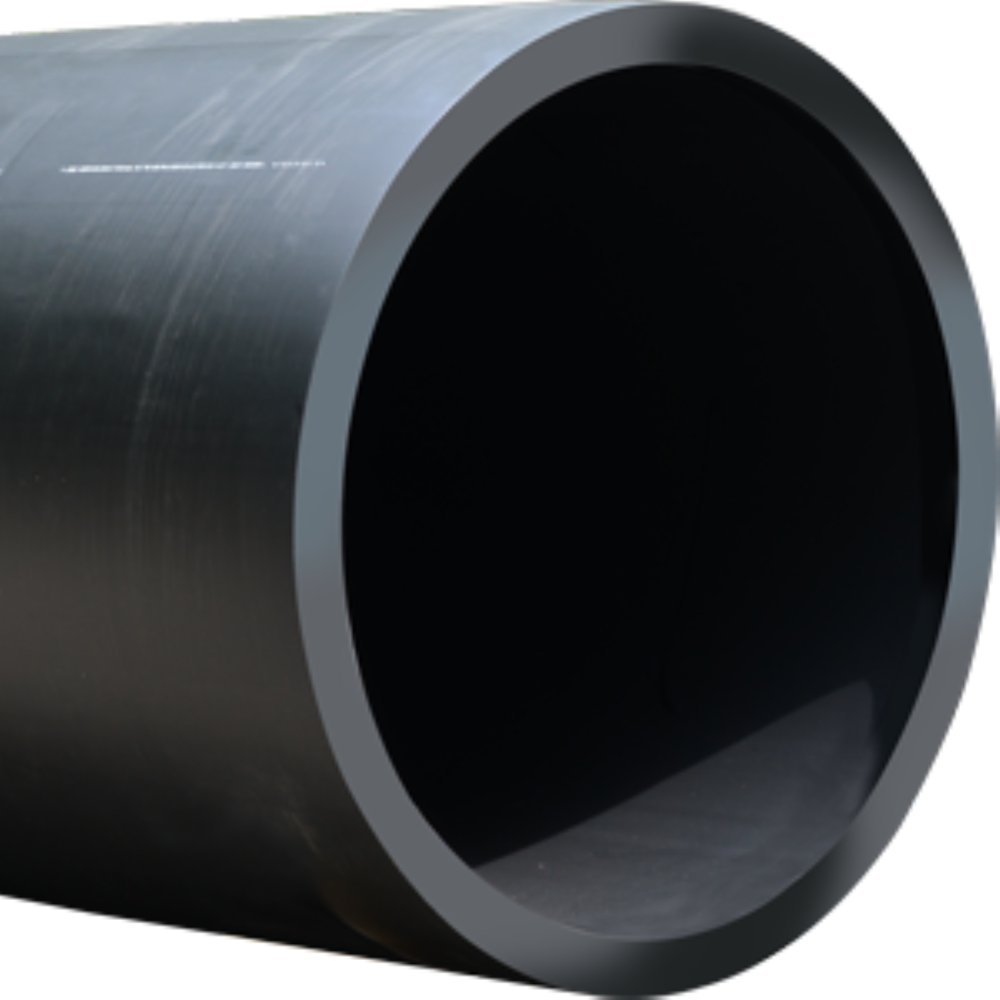
Jain HDPE (High Density Polyethylene) Pipes are manufactured from premium PE80 and PE100 virgin polyethylene raw material. These pipes are lightweight, flexible, corrosion-resistant, and designed for long service life. They are widely used for potable water supply, irrigation, sewerage, industrial fluid transfer, cable ducting, and infrastructure projects. Jain HDPE pipes are manufactured as per Indian and International standards and provide leak-proof performance with excellent hydraulic efficiency.
Technical Specification
| Parameter |
Specification |
| Brand |
Jain Irrigation Systems Ltd. |
| Material |
High Density Polyethylene (HDPE) |
| Material Grade |
PE63, PE80, PE100 |
| Pipe Size Range |
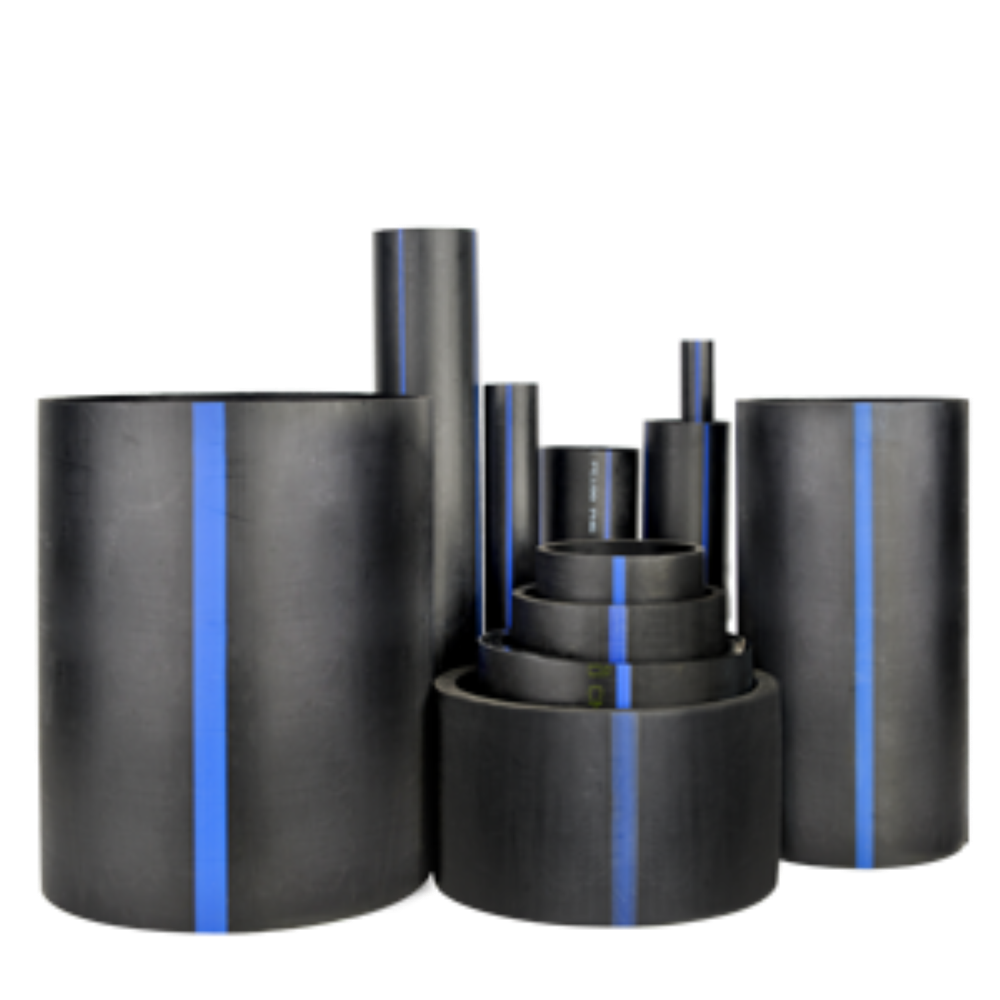
20 mm to 2500 mm OD |
| Pressure Rating |
PN 2.5 to PN 25 (2.525 kg/cm) |
| Standard |
IS 4984, ISO 4427, IS 14151, DIN 8074/8075, BS EN 12201 (depending on application) |
| Length |
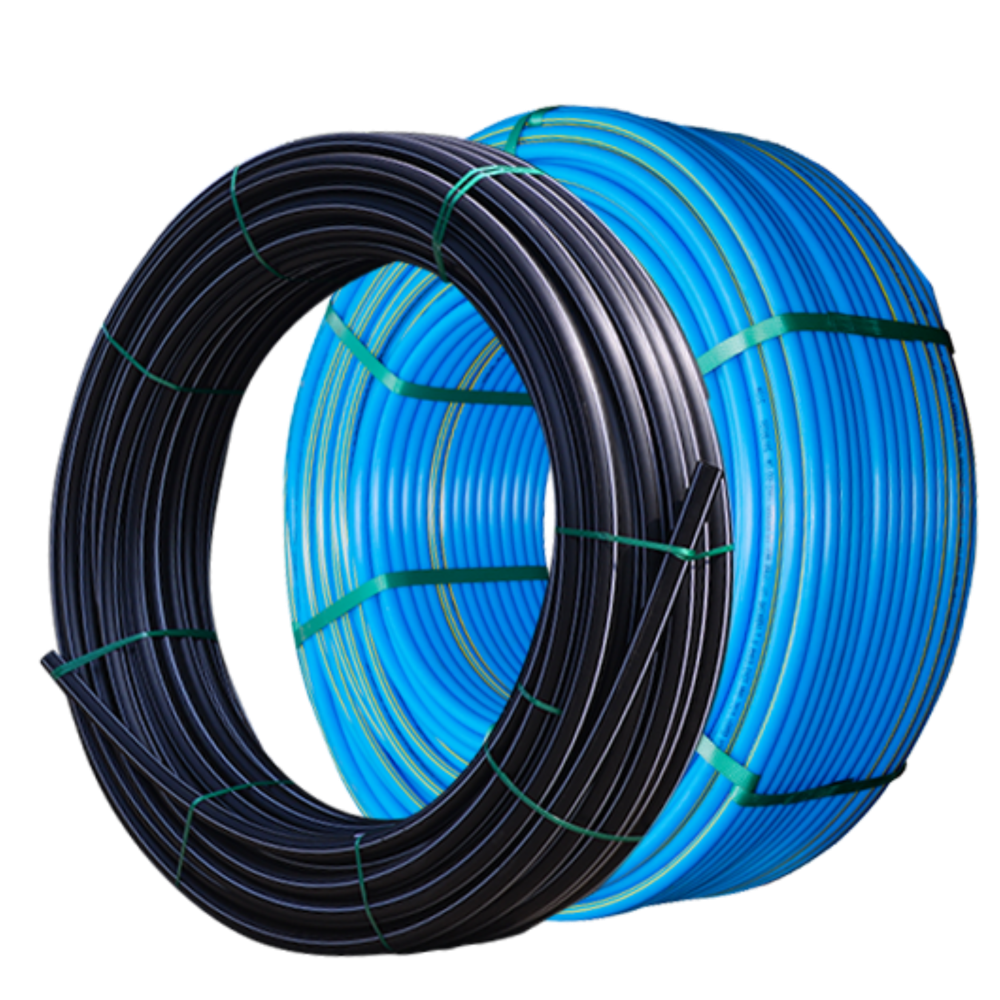
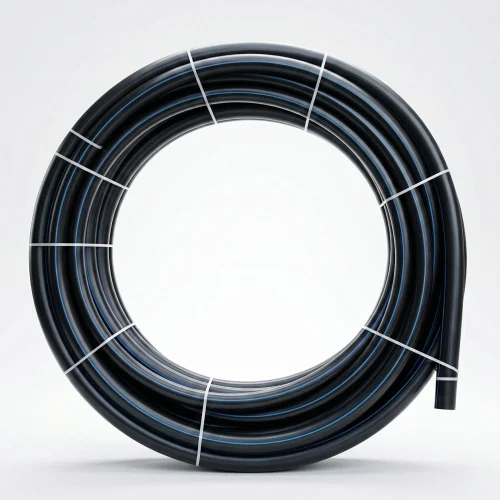
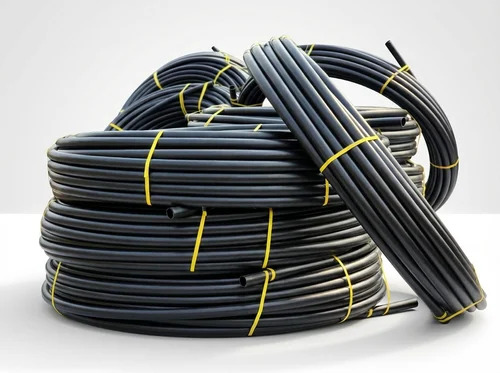
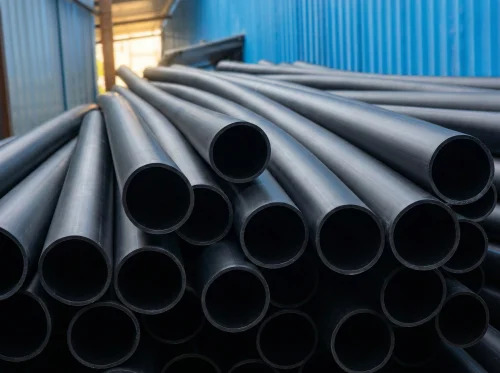
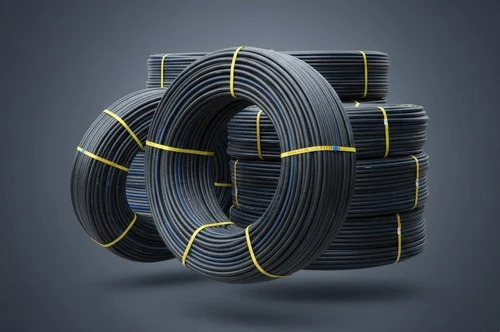
6 m & 12 m straight lengths; coils up to 160 mm OD |
| Colour |
Black, Black with Blue Stripes, Blue (application dependent) |
| Jointing Method |
Butt Fusion, Electrofusion, Compression Fittings, Flanged Joints |
| Working Temperature |
Approx. -40C to +60C |
| Expected Service Life |
Up to 100 years under normal operating conditions |
Superior Durability and Chemical ResistanceJain HDPE Pipes are manufactured for maximum durability, with a high resistance to most chemicals and acids. Engineered for a range of demanding applications, their robust material properties ensure optimal performance in harsh environmental conditions, both above and below ground. The smooth interior ensures low friction and high efficiency, making them ideal for consistent, long-term use.
Flexible and Easy Installation SolutionThanks to their high flexibility and lightweight design, Jain HDPE Pipes are exceptionally easy to transport and install, even across challenging terrains. Their minimum bending radius-20 times the outside diameter-enables convenient underground laying without significant risk of cracking or deformation. Multiple jointing options such as thermal butt fusion and electrofusion facilitate leak-proof connections.
Versatile Applications Across IndustriesFrom drinking water supply to wastewater management, agricultural irrigation, industrial processes, and gas distribution, these pipes prove versatile across a variety of sectors. Their compliance with rigorous standards like IS 4984 and ISO 4427 ensures reliability and safety in diverse operational environments. The pipes are available in a range of diameters and pressure ratings to suit project-specific requirements.
FAQ's of Jain HDPE Pipe:
Q: How are Jain HDPE Pipes installed and what jointing methods are available?
A: Installation of Jain HDPE Pipes is straightforward due to their flexibility and low weight. Common jointing techniques include thermal butt fusion, electrofusion, and flanged joints, all of which provide secure, leak-proof connections.
Q: What applications are most suitable for Jain HDPE Pipes?
A: These pipes are ideal for use in drinking water supply, sewage and wastewater management, irrigation, industrial liquid handling, cable ducting, and gas distribution. Their chemical resistance and strength make them suitable for both indoor and outdoor applications.
Q: When should I choose Jain HDPE Pipes over traditional piping materials?
A: Opt for Jain HDPE Pipes when you require high durability, corrosion resistance, flexibility, and longevity, especially where exposure to chemicals, underground installation, or extreme temperatures (-40C to +80C) is expected.
Q: Where can Jain HDPE Pipes be installed effectively?
A: Jain HDPE Pipes can be installed above ground, underground, or even exposed to sunlight, thanks to their UV resistance and flexible bending radius. They are excellent for urban infrastructure, rural water projects, and industrial pipelines.
Q: What benefits does the smooth surface of Jain HDPE Pipes provide?
A: The smooth inner and outer surfaces reduce hydraulic friction, improving flow efficiency and minimizing pressure losses. This results in lower energy consumption for pumping, and reduces maintenance needs.
Q: How does the pipe's flexibility contribute to underground applications?
A: The high flexibility allows the pipe to adapt to ground movements and accommodate changes in terrain. This property minimizes joint failures and reduces the risk of cracking, ensuring a longer service life underground.






 Send Inquiry


 Send Inquiry
 Send Inquiry
 Send SMS